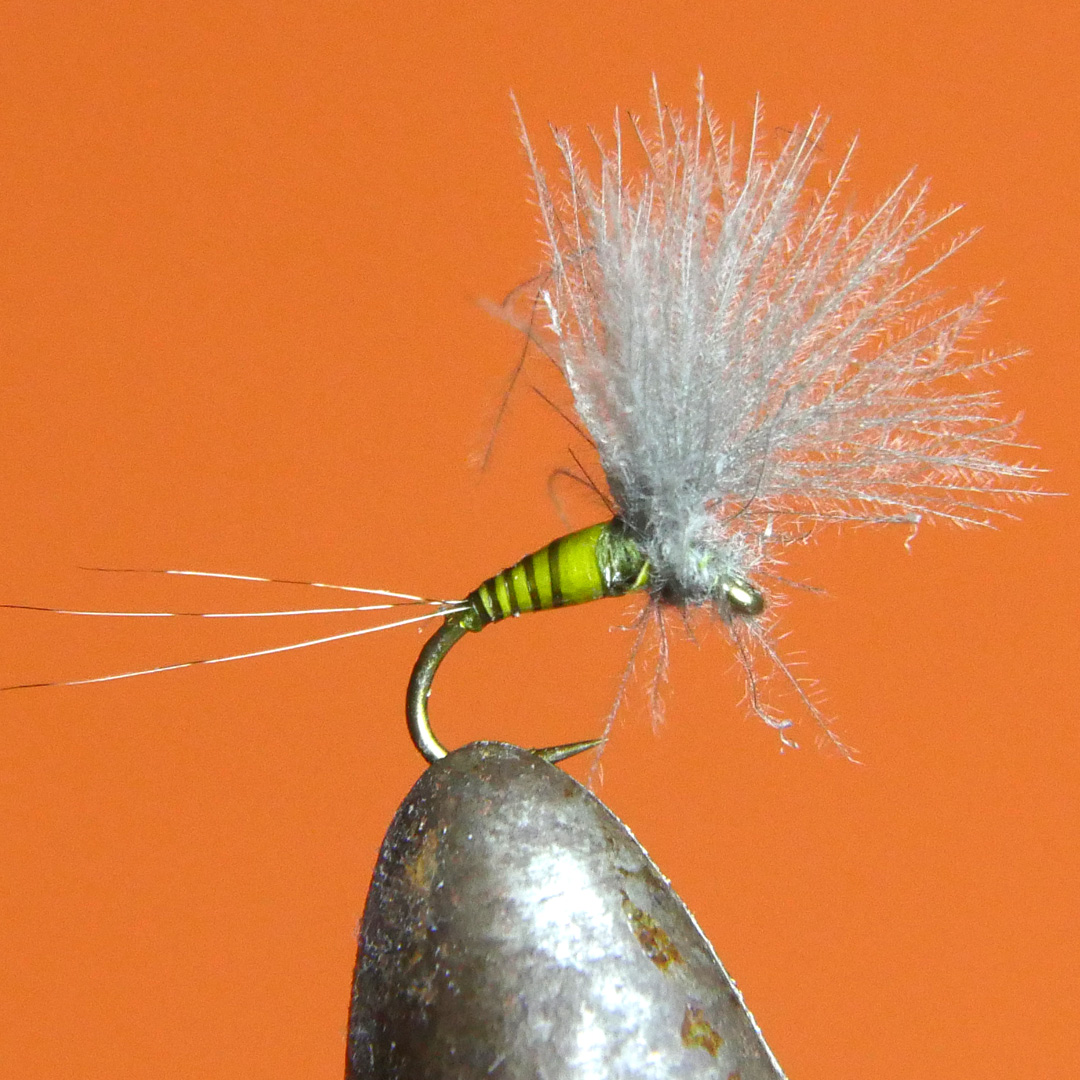
The Blue-Winged Olive (commonly abbreviated as BWO) represents a unique chapter in angling history. Unlike most classic flies, the BWO is not a singular invention tied by one specific person. Instead, it is an evolutionary category of flies spanning over a century of British and American fly-fishing literature, engineered to match one of the most prolific and widespread mayfly hatches in the world.
The concept of the Blue-Winged Olive was first formalized in the United Kingdom during the late Victorian era. Frederic M. Halford, widely regarded as the father of modern dry-fly fishing, officially documented the pattern in his 1897 masterpiece, Dry Fly Entomology.
Halford and his contemporaries on southern England’s famed chalk streams noticed that trout became exceptionally selective during hatches of small, olive-bodied mayflies with slate-blue wings (Ephemerella ignita). Halford’s original design was a rigid, upright dry fly utilizing dyed green starling quill for the body and dark, bluish-dun starling wing slips to perfectly mimic the insect's distinct silhouette.