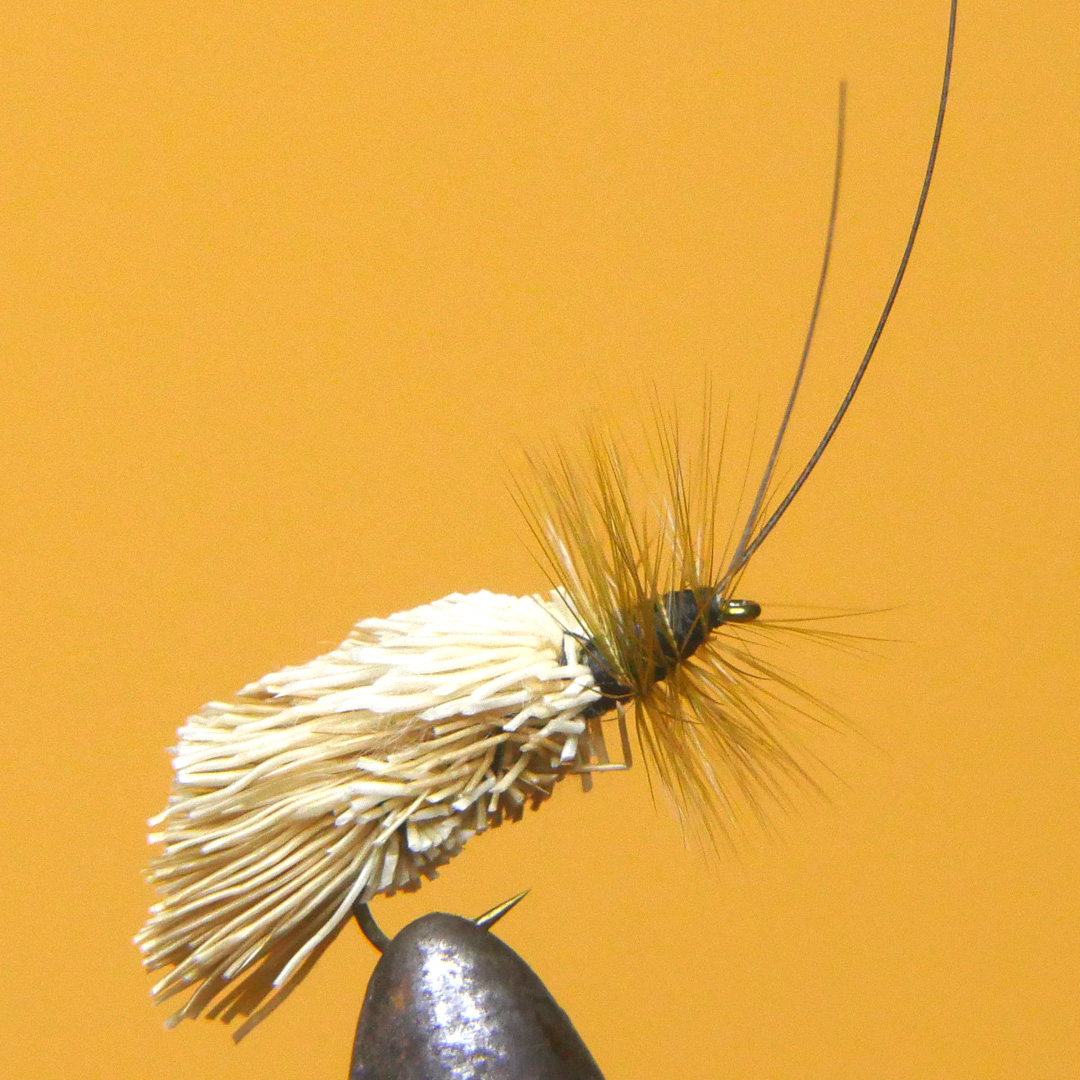
John Goddard and Clive Henry originally designed the fly to solve a specific tactical problem on British lakes, lochs, and reservoirs. They observed that when egg-laying female caddisflies emerged on stillwaters, they did not sit passively; instead, they skittered, skated, and skipped rapidly across the surface film, creating a very distinct V-shaped wake.
Traditional English dry flies wrapped in sparse rooster hackle would immediately swamp and drown if an angler tried to pull or skitter them across the lake. To construct an "unsinkable" fly that could tolerate being actively skated, Goddard and Henry turned to tightly spun hollow deer hair, a material highly popularized by American bass-bug tyers but less common in UK trout dry flies at the time.
When they introduced the pattern to the British public, it went by its original name: The G&H Sedge (named after the initials of Goddard and Henry).