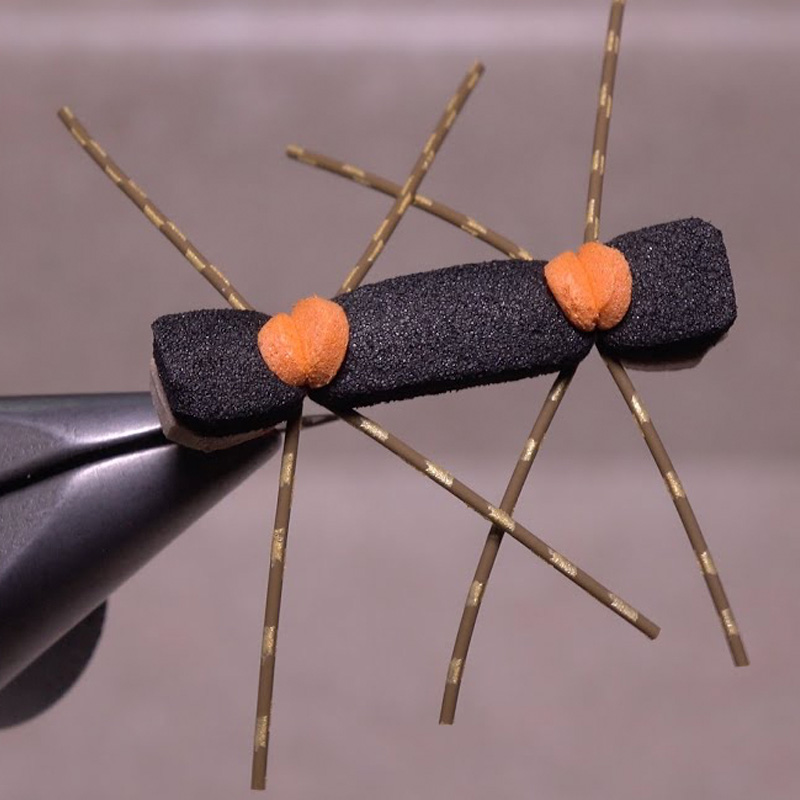
Terrestrial

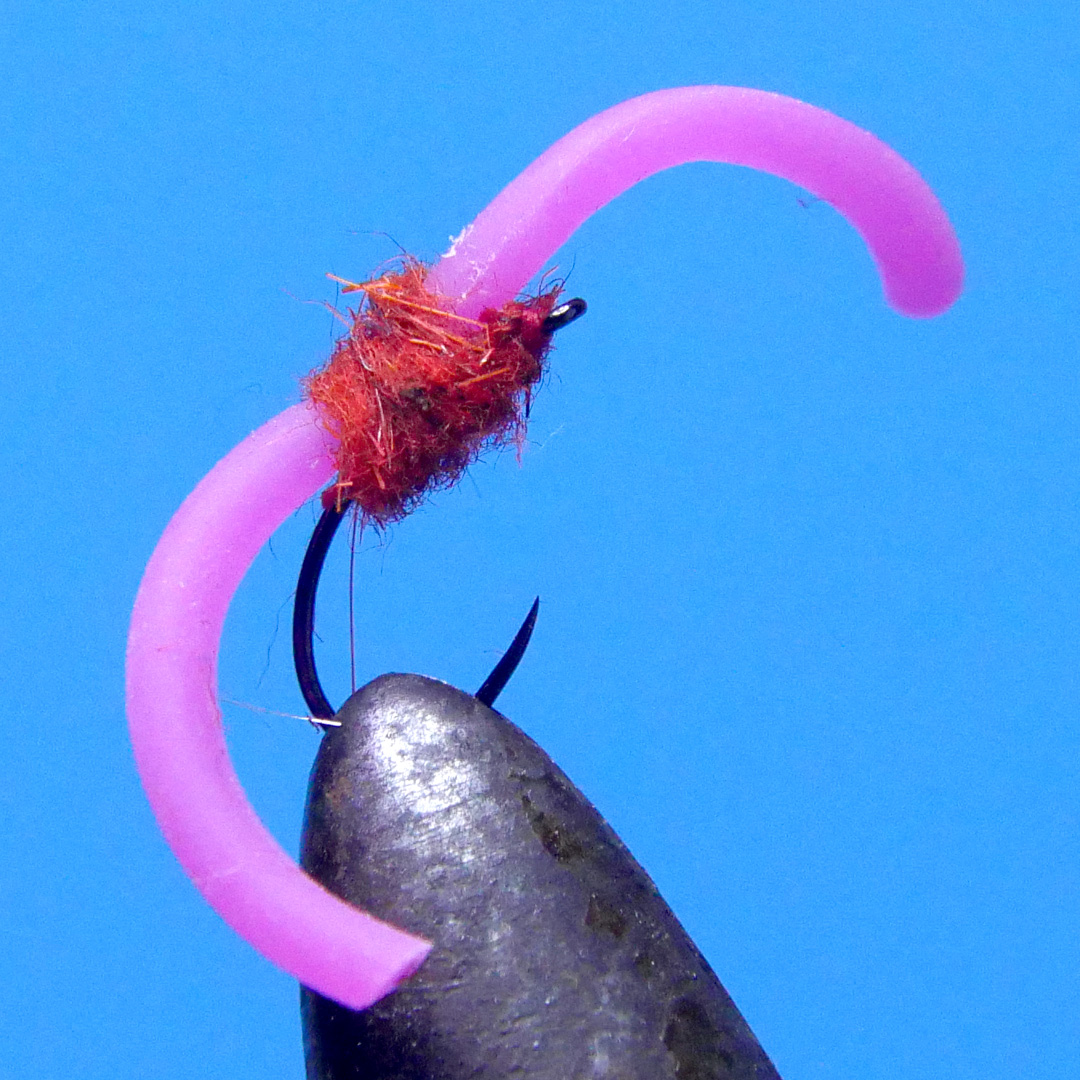
Squirmy Worm

Fly Description

The Squirmy Worm (or Squirmy Wormy) is one of the most controversial, wildly productive, and ultra-effective sub-surface nymph patterns in modern fly fishing. While traditionalists sometimes debate whether it qualifies as a true "fly," its hyper-elastic silicone body moves with an organic, lifelike wiggle that trout, grayling, and panfish find completely impossible to resist.It acts as a direct upgrade to the classic San Juan Worm, explicitly designed to mimic aquatic earthworms or aquatic larvae swept away in heavy currents. It is a premier "rescue pattern" for dirty, high-water conditions after a heavy rain.
Fly Type
Terrestrial
Fly Materials
Squirmy Worm Material

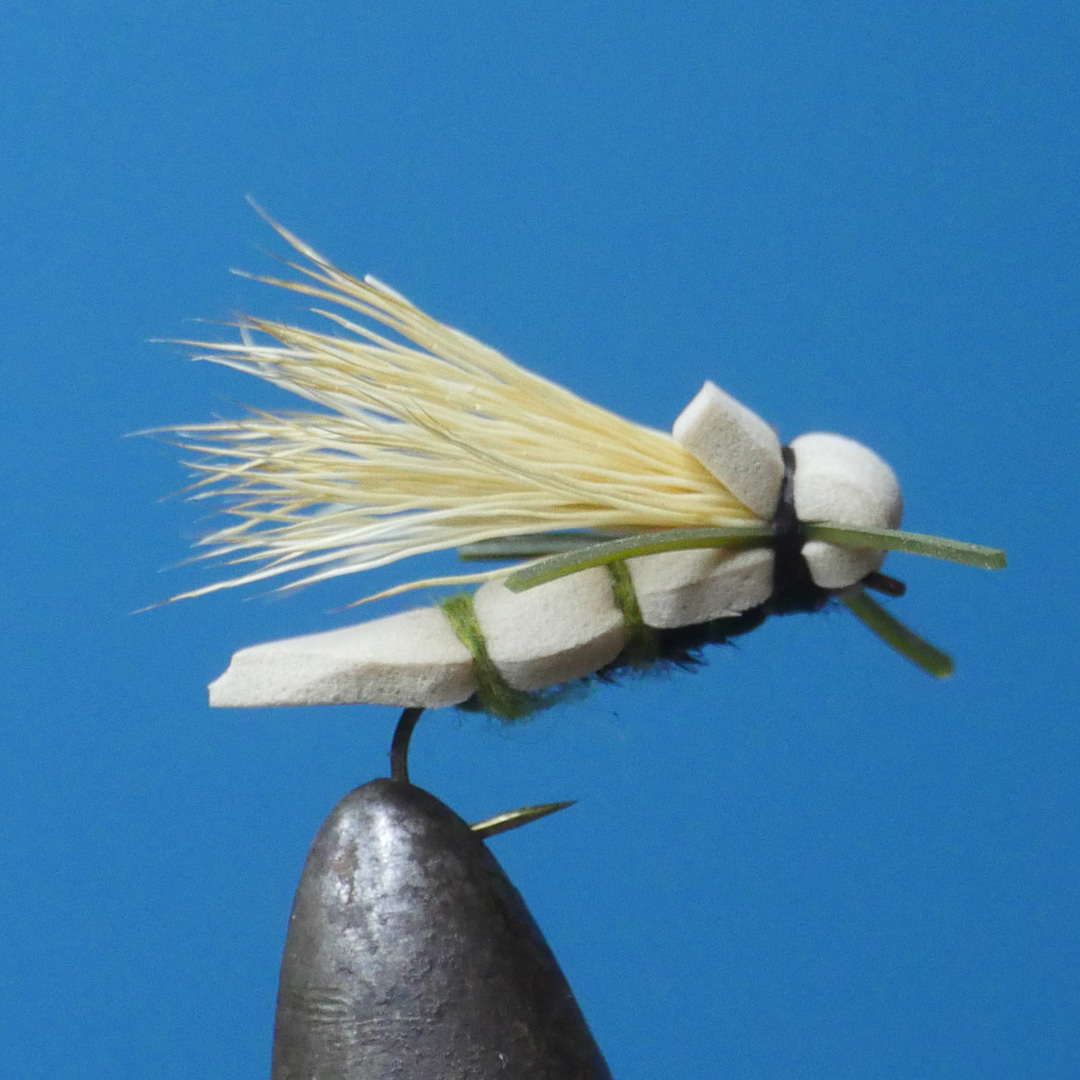
Loco Foam Ant

Fly Description

The Loco Foam Ant (or simply the Loco Ant) is a highly innovative, flashy twist on standard terrestrial dry flies. Originally developed by Harrison Steeves—often regarded as the "Terrestrial Man"—and popularized by tiers like Blane Chocklett, this pattern's signature feature is the use of Chocklett’s Loco Foam.Unlike flat, matte craft foam, Loco Foam has a unique metallic, prismatic coating laminated onto one side. When folded over the hook, this shimmering layer captures sunlight to mimic the natural iridescent sheen of a real ant's exoskeleton while creating a distinct, reflective trigger point that trout find irresistible.

Fly Type
Terrestrial
Fly Materials
Foam
Ostrich Herl
Hackle Tips
Elk Hair

Foam Hopper

Fly Description

The Foam Hopper is a modern, virtually unsinkable upgrade to classic deer hair grasshopper patterns like Dave’s Hopper. First popularized by western tailwater guides, this highly adaptable terrestrial dry fly pattern relies entirely on durable, closed-cell foam to mimic the blocky, elongated profile of a land-dwelling grasshopper stranded on the water.Because it is built from synthetic foam, it never waterlogs, requires zero floatant, and can hold up heavy nymphs underneath it all day long. When it hits the surface, it creates an enticing, hollow "splat" sound that aggressively draws trout out from beneath deep cutbanks.

Fly Type
Terrestrial
Fly Materials
Foam
Dubbing
Centipede Legs
Deer Hair

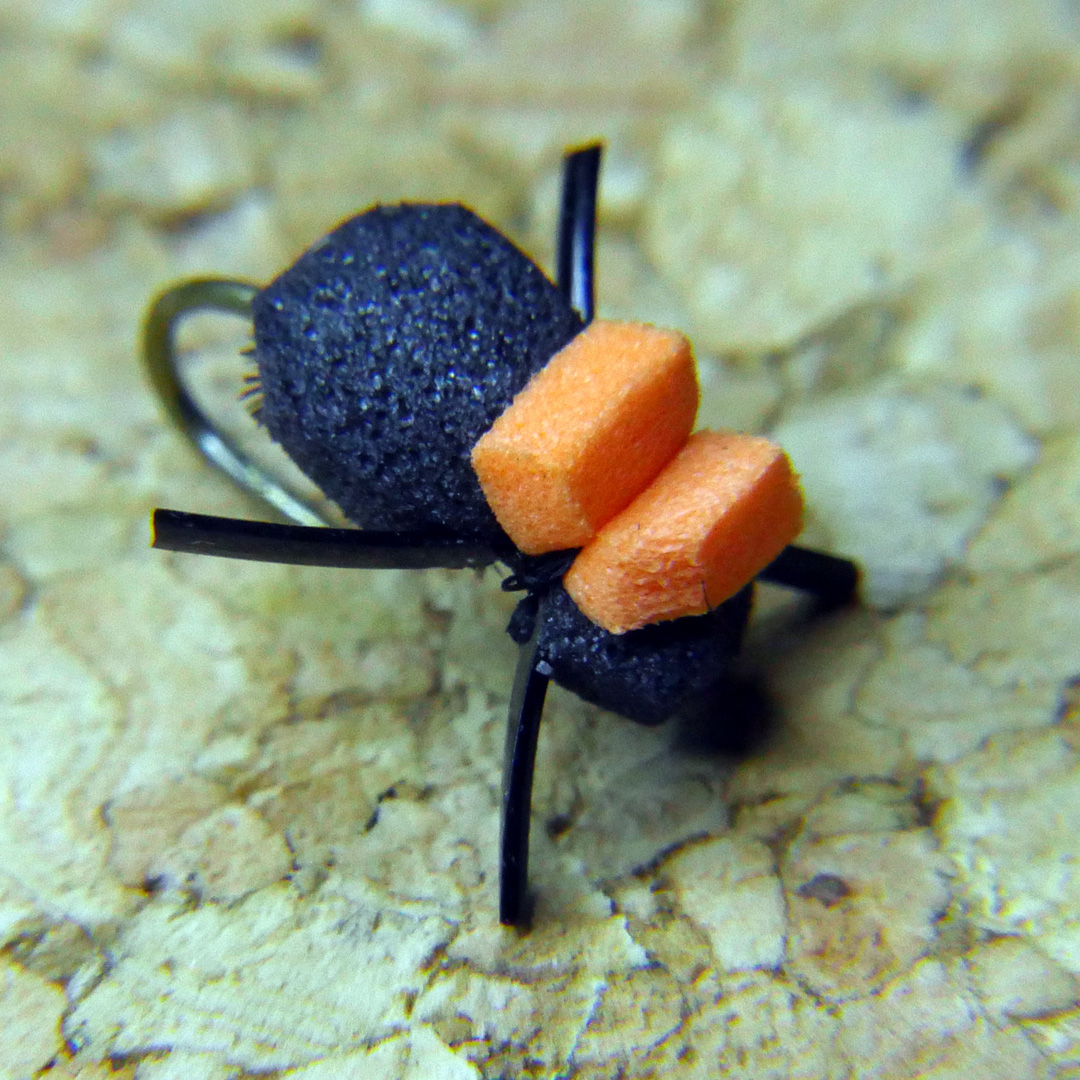
Foam Beetle

Fly Description

The Foam Beetle is a classic, virtually unsinkable terrestrial dry fly pattern that belongs in every angler's box from mid-summer through late autumn. While it can be customized endlessly, the core design uses a strip of closed-cell craft foam folded over an iridescent peacock belly.When cast, it lands on the water with a distinct audible "plop" or "splat" that acts as an underwater dinner bell, mimicking a heavy beetle falling out of overhanging bank vegetation.

Fly Type
Terrestrial
Fly Materials
Foam
Micro Tubing

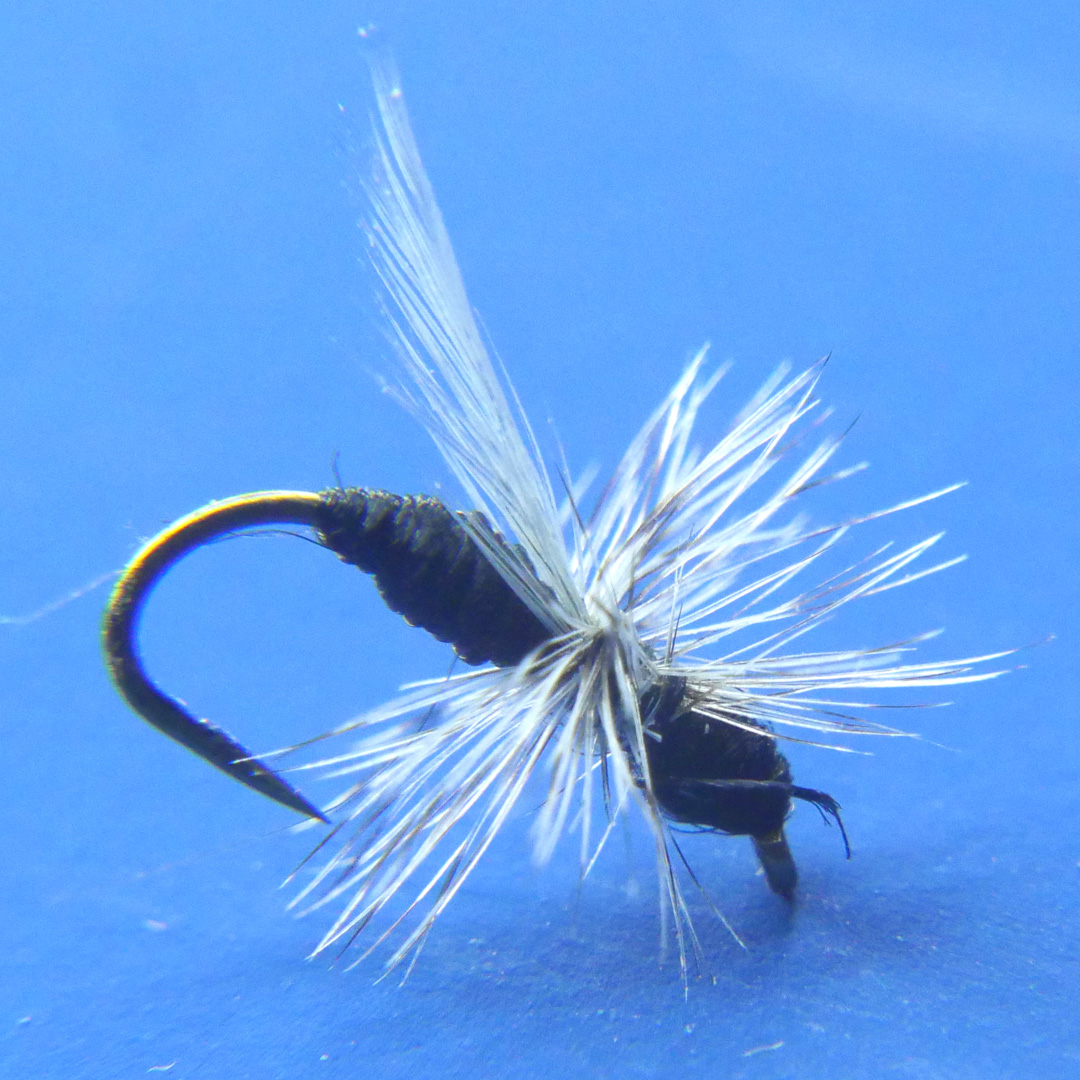
Flying Ant

Fly Description

The Flying Ant is an incredibly precise and lethal terrestrial dry fly pattern used primarily during the late summer and early autumn months. While standard ants are staple trout food, a "nuptial flight" (when thousands of winged ants take flight to mate and drop into the water) can trigger a total feeding frenzy where trout will ignore all other insects.Unlike bulkier terrestrial patterns like grasshoppers, a Flying Ant relies on a clean, dual-segmented body profile (the distinct head and gaster) separated by an ultra-thin waist and translucent wings trapped flat in the water.

Fly Type
Terrestrial
Fly Materials
Dubbing
Grizzly hackle tips
Grizzly Hackle

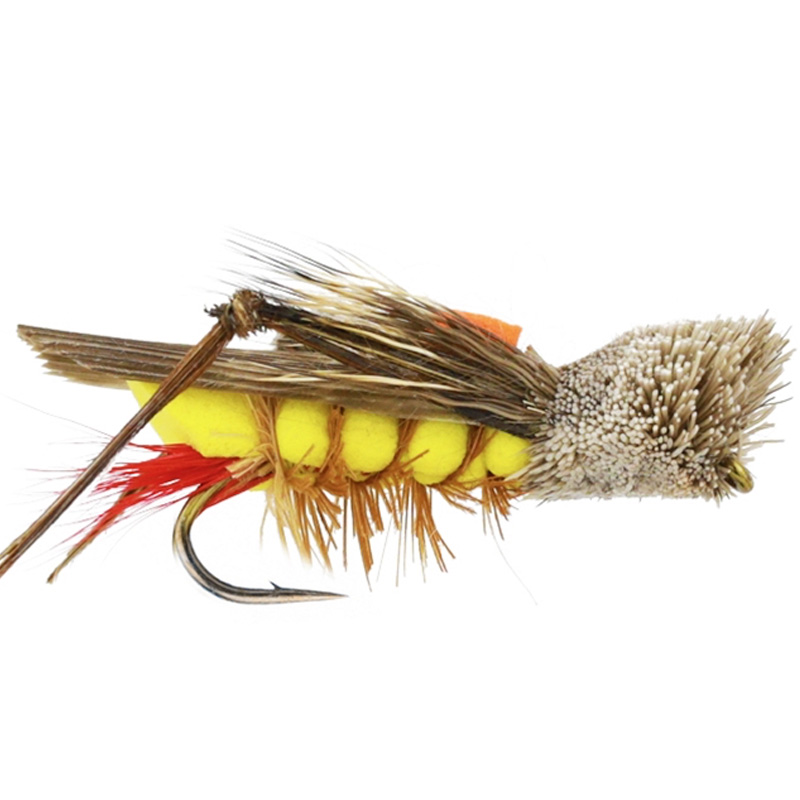
Dave's Hopper

Fly Description

The Dave’s Hopper is a masterpiece of terrestrial fly design, created in the mid-1950s by legendary fly tier and angler Dave Whitlock. Engineered to combine the lifelike leg action of a Joe's Hopper with the water-churning, high-floating properties of a Muddler Minnow, it is widely considered one of the best-selling and most effective grasshopper imitations of all time.Unlike modern foam patterns that float high like a cork, the Dave's Hopper was explicitly designed to sit slightly submerged in the surface film

Fly Type
Terrestrial
Fly Materials
Pheasant Tail
Deer Hair
Rooster Neck
Yarn
Turkey Feather

Chernobyl Ant

Fly Description

The Chernobyl Ant is a revolutionary, high-floating terrestrial dry fly pattern created in the early 1990s by guides Allan Woolley and Mark Floyd on the Green River in Utah. Designed to target large brown and rainbow trout during the late summer months, it is a classic "attractor" pattern that aggressively mimics grasshoppers, crickets, cicadas, or giant stoneflies.It was a historic milestone in fly design as it was one of the first wildly successful flies constructed entirely out of synthetic closed-cell foam. It is virtually unsinkable, highly visible to anglers, and generates violent "toilet-bowl" surface strikes from hungry trout.

Fly Type
Terrestrial
Fly Materials
Foam
Centipede Legs
Antron